こんにちは。
今期、Slopeslowからイカした商品が入荷致しました!
糸のブレンダーとして定評のあるカリスマが出掛けているブランドならではの雰囲気が素晴らしい。
糸から生地への製作段階に拘りがありすぎる、知る人ぞ知るブランドだ。
Hello.
We’ve just received some fantastic new pieces from Slopeslow!
The brand carries a unique, exceptional vibe—no surprise, given it’s the brainchild of a visionary renowned for his mastery in blending yarns.
It’s a brand known to those in the know, distinguished by an uncompromising, obsessive attention to detail throughout the entire production process—from the yarn itself all the way to the finished fabric.
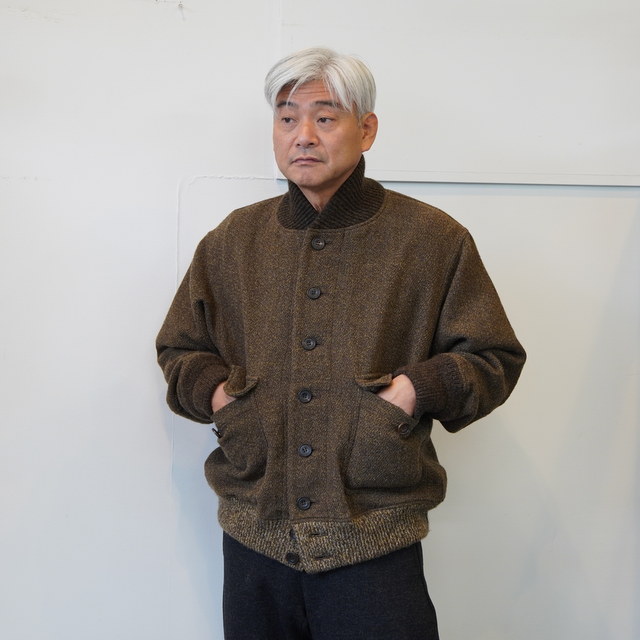
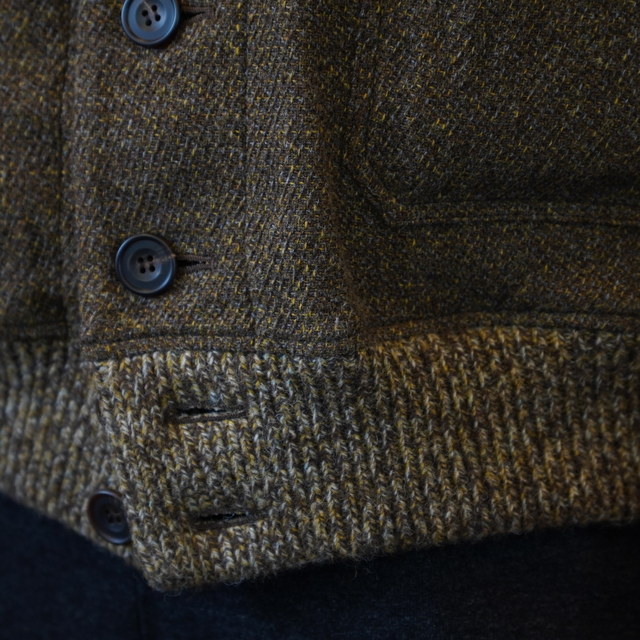
C.C.C. Tweed Jacketは1930年代世界恐慌下のアメリカで失業対策事業に従事していた市民保全部隊=Civil Conservation Corpsに支給されていた、通称C.C.C. Jacketをモチーフにしている。オリジナルは年代などによって様々な素材、デザインが存在するが、大体裾にはニットではなくシャーリングゴムが挿入された特徴的なリブ付属がついている。繊維屑から作られた雑材なのだろうか、様々な色が混ざり合った色目が特徴で、古着で見かけるものはゴムが伸びきっているものが多いので、ここは色を変えたニットリブで表現した。
The C.C.C. Tweed Jacket is inspired by the “C.C.C. Jacket”—a garment issued to members of the Civilian Conservation Corps, a public works program established in the United States during the Great Depression of the 1930s. While original versions vary in material and design depending on the era, they typically feature a distinctive hem detail: an elasticized, shirred band rather than a standard knit rib. The fabric is characterized by a variegated, multi-colored appearance—likely the result of being crafted from reclaimed textile scraps. Since the elastic in surviving vintage pieces is almost always completely stretched out, we have opted to recreate this detail using a knit rib in a contrasting color.
Slopeslow(スロープスロウ)/ C.C.C Tweed Jacket -BROWN-
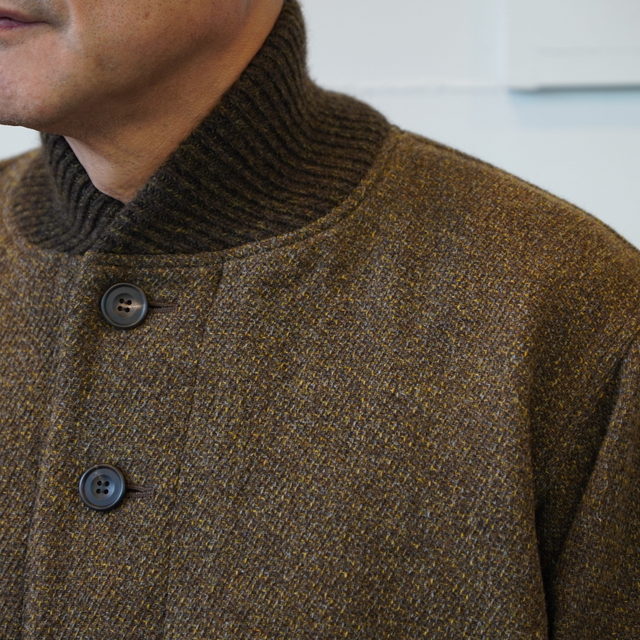
生地の制作はニットと同じ糸を使用することを前提に、Oの旧知の岩手、花巻のツイード専業の機場に足を運んで依頼した。岩手はもともと手織りのツイード素材の産地で、現在は機械織りではあるが古い織機を使い、ゆっくりしたスピードで手間はかかるけれどそれでしか出せない味わいのツイード素材を制作している工場だ。毎年シャネルへ素材の提供もしており、真摯に、誠実にものづくりに取り組んでいる。
同じ原料、色を使い、ツイード用の糸は強撚でドライな風合いに仕上げ、ニット部分は従来のセーターと同じ仕立ての糸に。継続のセーターと同じ工場で編立をしたニットパーツと組み合わせたツイードブルゾンを、自宅で洗い加工を加え、ヨレっとした雰囲気に仕上げた。
For the production of the fabric, we reached out to a specialized tweed mill in Hanamaki, Iwate—a place with which O has a long-standing relationship. Iwate is a region historically known for hand-woven tweed; while the mill now employs machine-weaving, it utilizes vintage looms that operate at a slow, deliberate pace. Though this process is labor-intensive, it yields a unique, rich character that simply cannot be replicated any other way. The mill even supplies fabric to Chanel, a testament to their sincere and dedicated approach to craftsmanship.
Using the same raw materials and color palette, we developed a high-twist, dry-textured yarn specifically for the tweed, while the knit components were crafted using the same yarn as our standard sweaters. We combined these tweed sections with knit parts—produced at the same facility as our ongoing sweater line—to create a tweed blouson. Finally, the garment was washed at home to achieve a relaxed, slightly lived-in, and gently rumpled aesthetic.
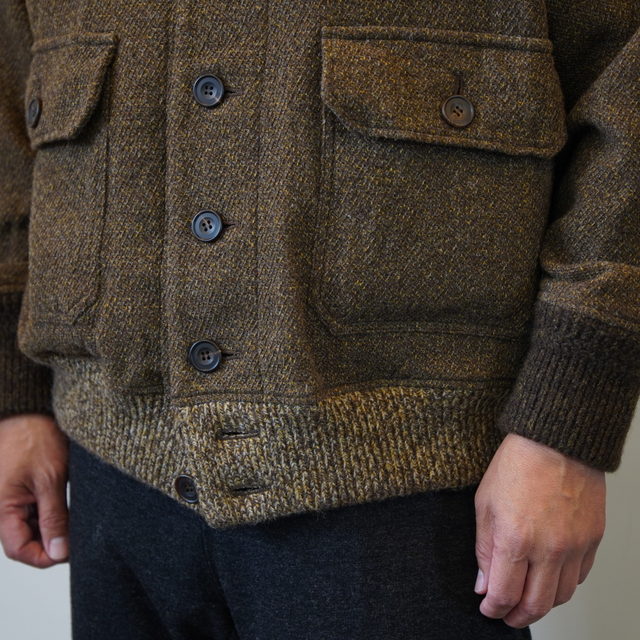
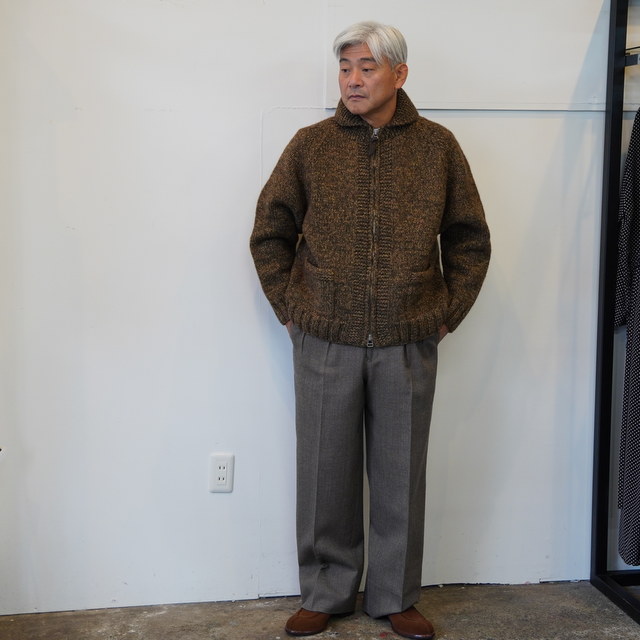
OUTER Slopeslow(スロープスロウ)/ C.C.C Tweed Jacket -BROWN-
PANTS MAATEE&SONS
SHOES Le Yucca’s (レユッカス)/ U-TIP SHOES -SNUFF-
古着屋巡りをしていて見つけた、恐らく40~50年代と思われるアメリカ製のウールカーディガン。素材や編み組織、色やメーカーは違うけれど、共通する特徴があるカーディガンが複数見つかった。以前資料として購入していたものにも同様の特徴があり、固有の名称は無さそうなものの一つのジャンルとして掘り下げることができるものであった。
「粗野なガサガサのウール素材」「脇接ぎ無しの丸胴編み」これは同年代のミリタリーセーターでも見られる編み方で、素材の方向性も近い。
襟~肩の伸び止めのボロ隠し仕様や太い前立て仕様、横穴に開けたボタンホール、ボタン位置や間隔が特徴的で、どのカーディガンにも共通した要素だ。
この名もない「old style cardigan」の研究からはじまり、新たに定番となり得るようなSlopeslowなりの「old style」のプロダクトを開発したいというのが今シーズンの命題となった。
While browsing through vintage clothing shops, I came across an American-made wool cardigan—likely dating back to the 1940s or 50s. I subsequently discovered several other cardigans that, despite differing in material, knit structure, color, and manufacturer, all shared a set of common characteristics. I even found similar traits in pieces I had previously acquired for research purposes; while these garments lack a specific, recognized name, they clearly constitute a distinct category worth exploring further.
Key features include a “coarse, tactile wool” and a “tubular knit” construction—a technique also seen in military sweaters from the same era, which share a similar material aesthetic.
Other defining elements—consistent across all these pieces—include the specific way the collar-to-shoulder area is reinforced to prevent stretching (often concealed by a facing), a wide front placket, buttonholes oriented horizontally, and a distinctive arrangement and spacing of the buttons.
My objective for this season is to delve into these nameless “old-style cardigans” and, through this research, develop a new, signature “old-style” product—one that embodies the Slopeslow philosophy and has the potential to become a staple in our collection.
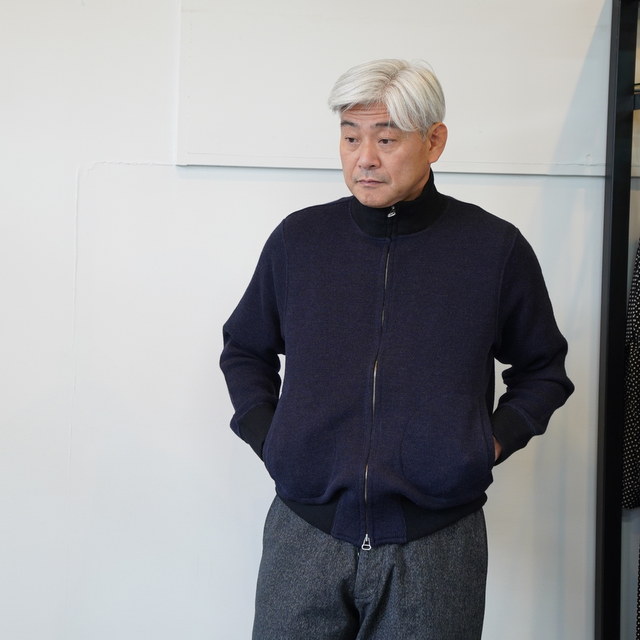
Slopeslow(スロープスロウ)/ Dry Wool Interlock DECK ZIPPER -NAVY-
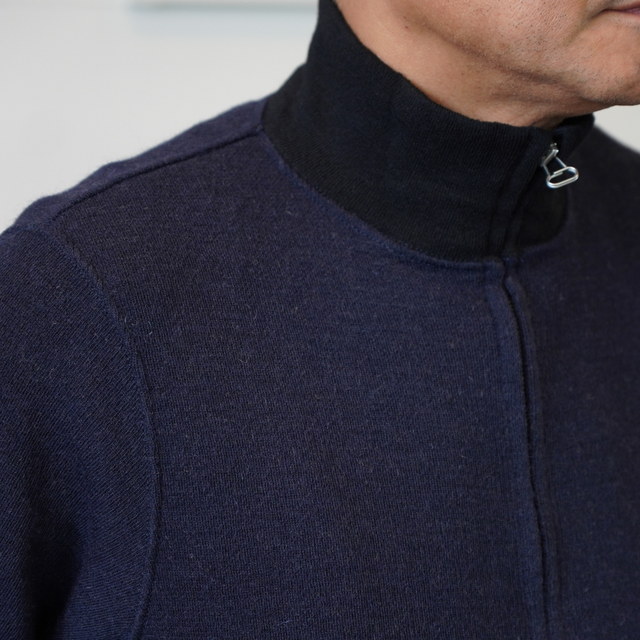
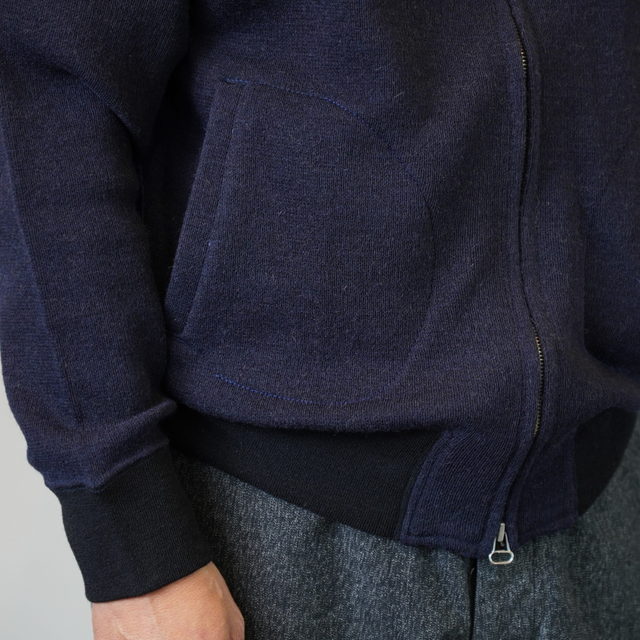
ミリタリーセーターに使われていたことが示すように、当時は工業製品として量産型のポピュラーな編み機であったのだろうが、この編み方ができる機械を現在探すのは非常に難しく、同じ編み機での再現はあきらめざるを得ない。
吊り編み機を使ったスウェットやデニムなど、当時の作り方を継承、再現できるアイテムも多いけれど、ニット製品に限っては時代のニーズに合わせてそうした背景は淘汰されてしまった。そうしたものを作りたい、買いたいというニーズが無いからなのだろう。
The fact that this stitch was used for military sweaters suggests that the machinery capable of producing it was once a common, mass-produced industrial tool. Today, however, finding such a machine has become extremely difficult, making it impossible to replicate the original technique using the same type of equipment.
While many items—such as sweatshirts and denim—can still be produced using traditional methods like loop-wheel knitting, the techniques once used for knitwear have largely vanished, having been phased out to meet the changing demands of the times. Presumably, this is because there is simply no longer any demand—either to create or to purchase—such items.
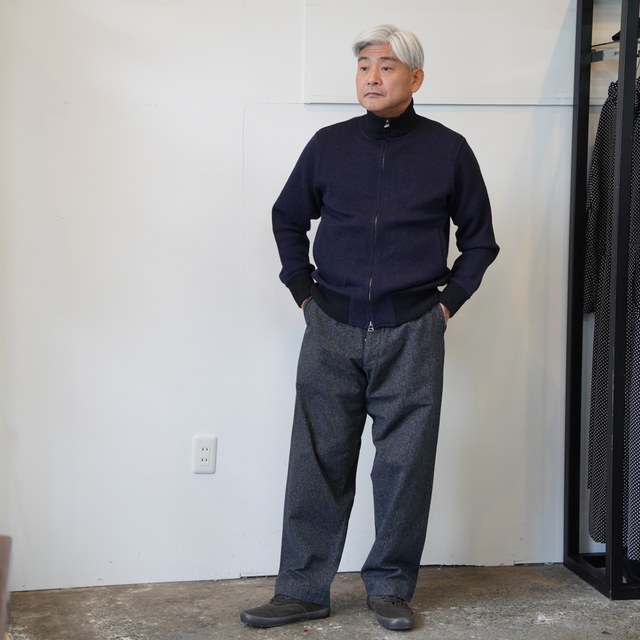
OUTER Slopeslow(スロープスロウ)/ Dry Wool Interlock DECK ZIPPER -NAVY-
PANTS HERILL(ヘリル)/ Blackchambray Workpants -Black-
SHOES Graphpaper (グラフペーパー)/ REPRODUCTION OF FOUND for GP US NAVY MILITARY TRAINER -BROWN-